01
Heavy Fabrication
Thick steel assemblies and multi-pass welding built the expertise to control demanding weldments where preparation, sequence, and sound workmanship matter.
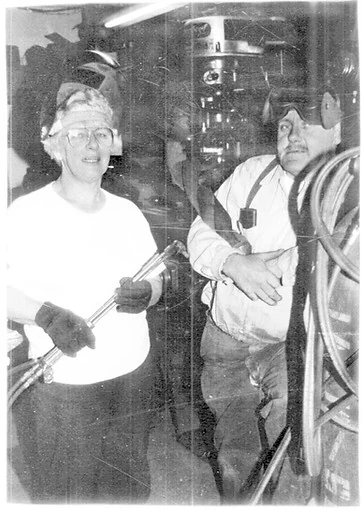
The Jack & Sons name dates to 1969 and a family-owned welding and fabrication job shop that repaired and fabricated forestry equipment in northern Michigan. Today’s company is a modern manufacturing operation that carries the name — and the practical judgment developed in that work.
In 1969, forestry equipment did not arrive at the original Jack & Sons shop as an abstract manufacturing exercise. It arrived because something needed to be built, repaired, or returned to service. The work demanded direct observation, sound judgment, and the ability to make durable solutions from the material at hand.
That environment shaped the approach today’s Jack & Sons continues to carry forward: understand how the component must perform, account for the realities of fit-up and use, and take responsibility for the finished result.
The original business did not broaden by leaving its foundation behind. New demands extended the same hands-on discipline into heavier materials, tighter requirements, larger responsibility, and more complex assemblies.
Thick steel assemblies and multi-pass welding built the expertise to control demanding weldments where preparation, sequence, and sound workmanship matter.
Repair work often required more than welding. Machining replacement parts added another way to solve the complete equipment problem.
That combined experience led to larger work for government agencies, including snowplow carriages for commercial trucks, increasing both scale and responsibility.
As customer needs shifted toward lighter components, Jack & Sons expanded into aluminum fabrication and increasingly complex projects.
In 2021, Jack & Sons became part of the United Technical group of companies. Today’s organization is a modern manufacturing business operating under the historic Jack & Sons name, and the relationship added resources that deepen the work around the weld itself: welding engineering, welder-workmanship training, nondestructive testing, metallurgical testing, and weld-process validation.
Those capabilities complement the hands-on approach inherited from the original shop. Practical knowledge informs how the work is planned and performed; engineering, inspection, and testing provide additional ways to develop, validate, and document the process.
Today’s Jack & Sons is a modern manufacturing operation: advanced CNC machining, laser and plasma cutting, forming, fabrication, robotic welding, dimensional inspection, and documented quality.
The organization, materials, equipment, and measurement technology are new, but the through-line from the original shop remains clear. The problem-solving learned through forestry repair informs fabrication. Heavy steel and multi-pass welding experience informs complex assemblies. Replacement-part work informs machining. Larger programs reinforce process control and responsibility. Engineering, testing, and inspection strengthen how results are verified.
That accumulated experience supports demanding defense and industrial work where geometry, workmanship, documentation, and delivery all have to align.
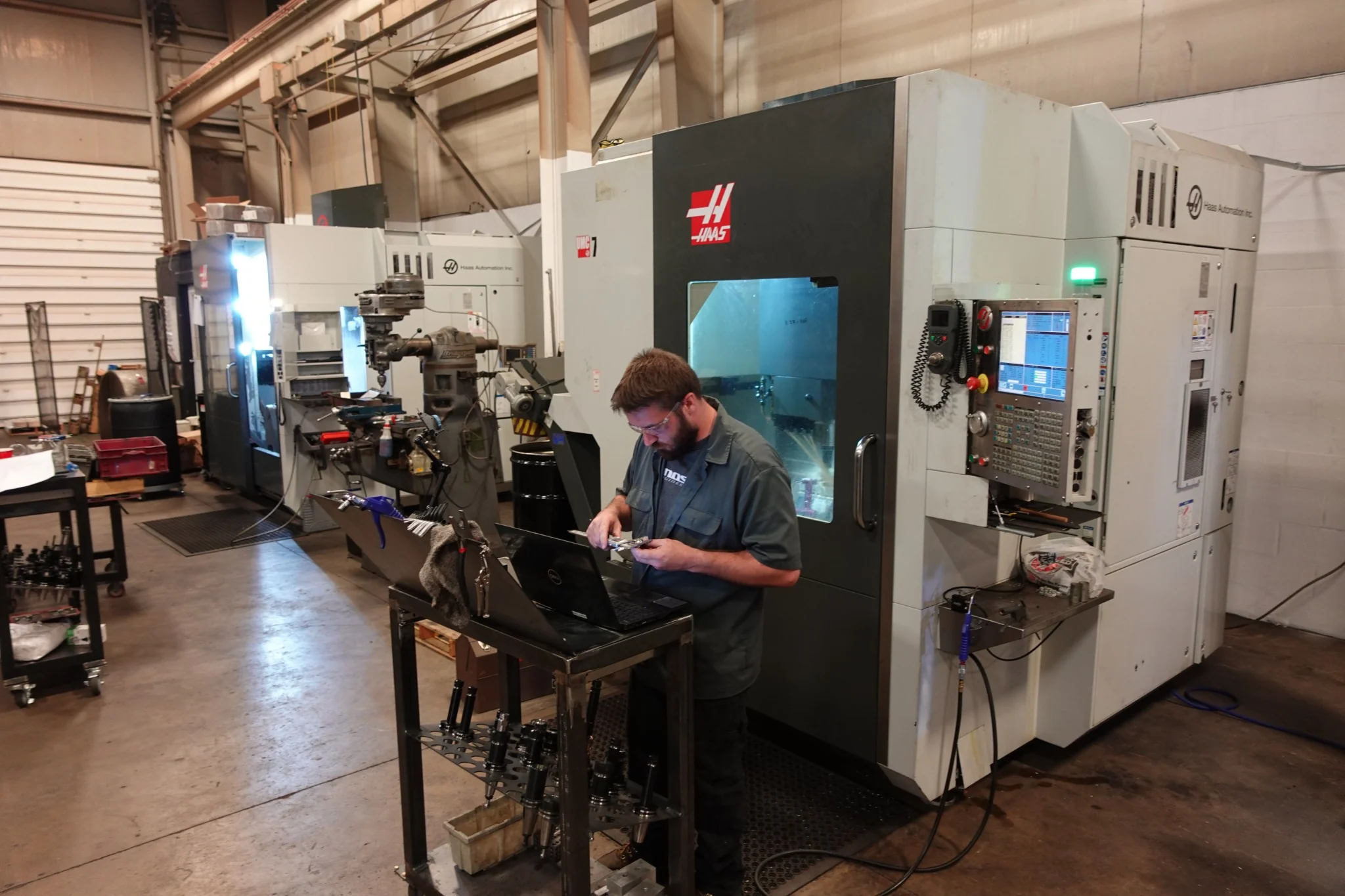
Explore the current manufacturing capabilities and markets, or send drawings and requirements for a direct assessment of the work.